





A save only counts when someone plans to return
Of everything a reader can do with a post, saving is the quietest and the most honest. A save puts a post or a Note in the reader's Saved tab. Writers don't see who saved, so the signal is honest: nobody saves to be polite. A save means this is worth keeping.
Bought saves come from accounts that never read
Paid saves are bots and empty profiles. They don't read the post, don't come back to it and don't open your emails. Their saves weigh nothing, and buying them is forbidden anyway.
Myth: a pile of saves pushes a post into more feeds. Reality: saves from real readers, together with likes, a comment and time spent on the post, are what move it.
Saves feed every other signal
A reader who saves a post usually finished it, and often follows, subscribes or comes back to comment. That makes a save a good sign that your post found the right reader, and it is the reason to want real ones.
Free saves from verified writers, here
Yes, free Substack saves are available at StackRooms, no conditions. Every account is a verified real writer, no bots, saving by hand from their own account, and no Substack password is needed.
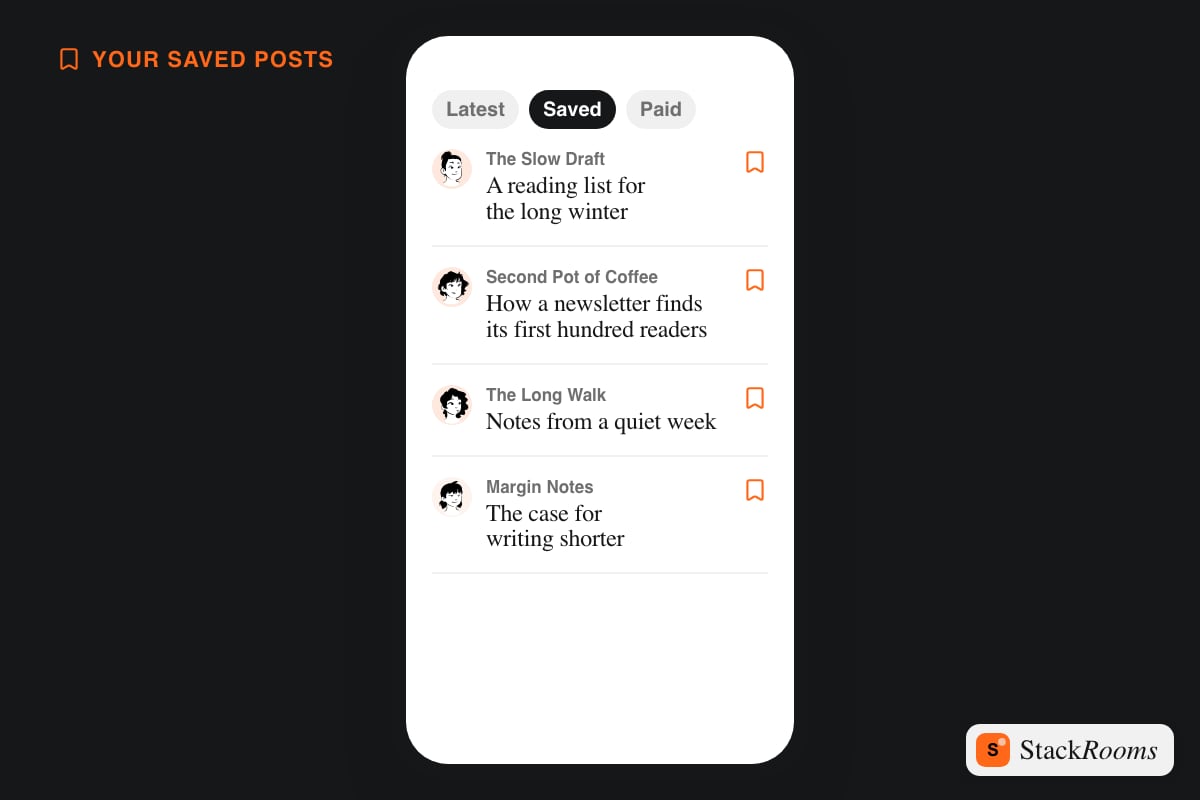
Posts people save share one trait
- They solve something: a checklist, a template, a step-by-step.
- They hold reference material a reader will want again.
- They stay true over time, so a reader saves them for later and comes back.
- They open strongly, so people read past the first two lines.
Posts that are saved tend to be read again and shared, which pairs saves with restacks and comments. Say what the post is for in the first lines, then let readers find it again with a clear title. Saving works the same for Notes in the app. Readers find their saved items as described in how to find saved posts on Substack.
 Can you buy Substack comments? No, and a paid comment weighs nothingCan you buy Substack comments? No. Paid replies read as fake and carry no weight. Get free comments from verified writers who read your post and answer it.